
How are decks made? Understanding the digitization, manufacturing and installation process of your new deck
If you're planning to get a new deck on your boat, and you've chosen teak, a composite deck, or a cork alternative, this guide will walk you through the full process, from digitization and manufacturing to final installation so you’ll know exactly what to expect from start to finish.
TEAK DECKS
Digital Templating
The first stage involves one of our technicians digitally templating the area using the latest in precise measuring technology. Our team digitally templates vessels all around the world.
Engineering
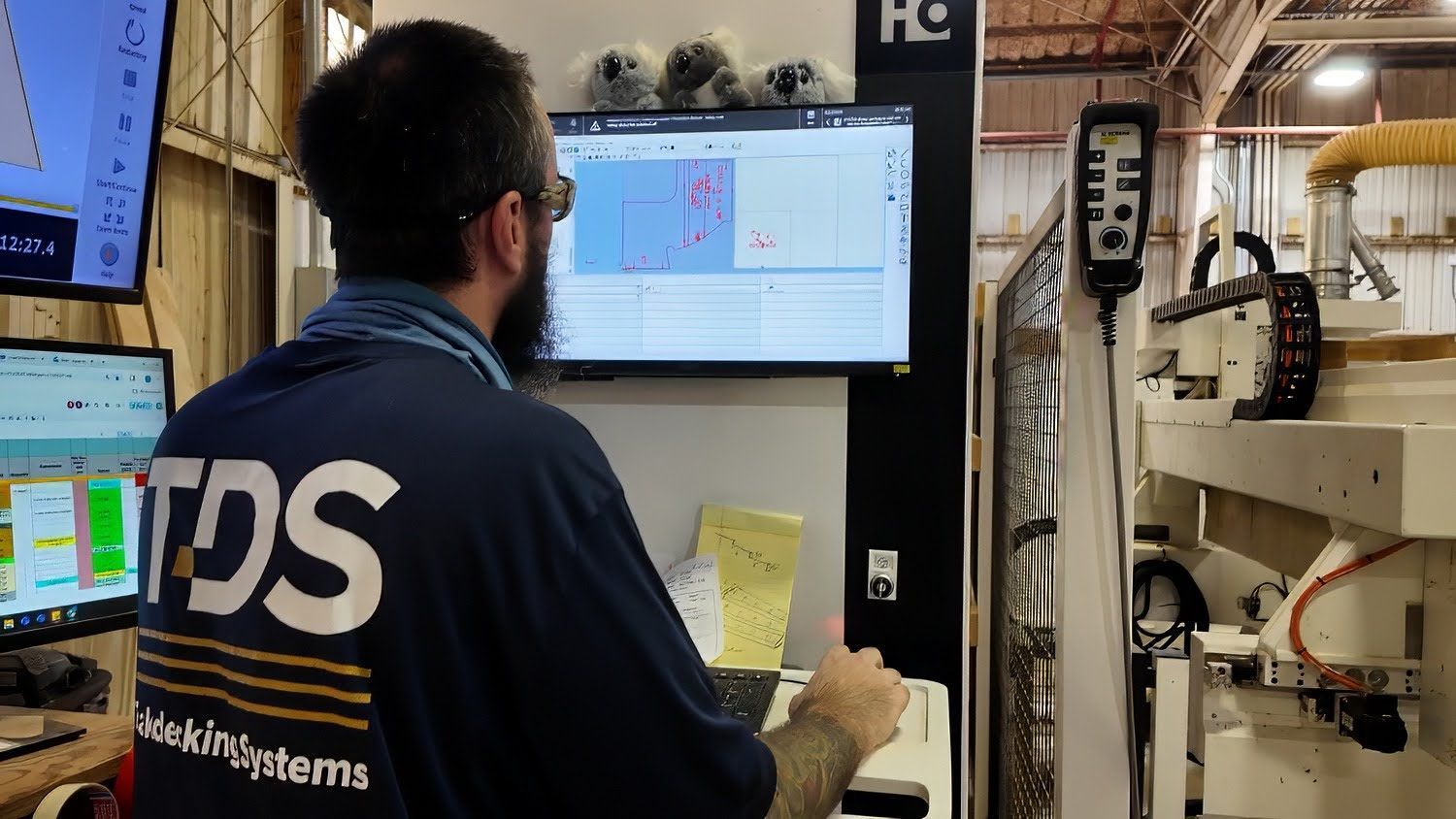
Our experienced designers are masters of creating beautiful and technically precise decks using CAD construction program, importing data provided by our digital templating team. Our designers’ exceptional ability to create visual symmetry ensures impeccable finishes and beautiful aesthetic decks.
Manufacturing
TDS panels are manufactured in our factory utilizing jigs that are adjusted to conform to the vessel’s shape. Teak planks of the required thickness and width are carefully hand inspected, scrutinizing each plank for grain orientation, mineral deposits, or imperfections such as a small knot.
The planks are placed into the jig in such a way that the finished deck will have a uniform butt joint pattern.
Creating a Watertight Barrier
A phenolic or fiberglass backing is securely vacuum bonded to the teak, using our own epoxies that guarantee durability, flexibility, strength and reliability. The exceptional bonding strength, ensures your deck stands the test of time.
After the epoxy cures, the newly formed panels are removed from the jig, and the seams between the planks undergo routing, cleaning, and caulking.
Margin Trim
Once the caulking is cured, the final step involves laying out the teak deck and laying all the margin trim. Upon completion, the finished deck undergoes a thorough quality inspection, ensuring it aligns precisely with the template.
Transport & Installation
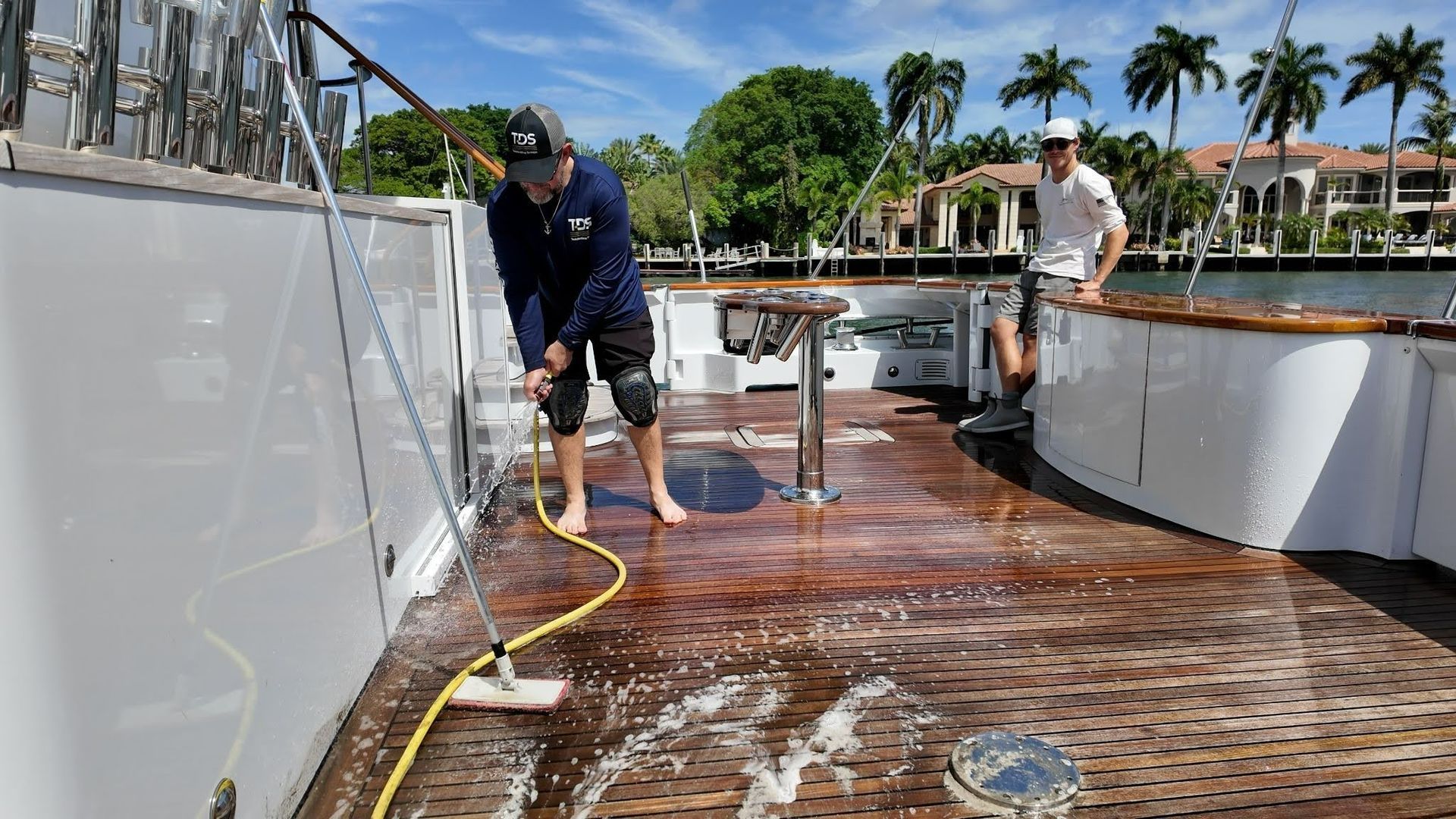
The finished deck panels are placed in custom-made crates and then shipped and installed worldwide. Prior to the arrival of the new deck, the old deck is removed. Our installers inspect for any issues such as water intrusion, delamination, or corrosion on the vessel’s surface. If such issues are found, the areas are repaired before the new deck is installed.
Caulking & Sanding
Once the deck has been bonded to the vessel, it is time to caulk using our own proprietary, UV, and chemical-resistant caulking TDS SIS-440. After curing, the deck is then ready to be sanded. The entire deck is sanded with 36 grit to remove excess caulking, followed by 60 and 80 grit to enhance the look of the deck.
COMPOSITE DECKS
Digital Templating
The first stage involves one of our technicians digitally templating the area using the latest in precise measuring technology. Our team digitally templates vessels all around the world.
Engineering
Our experienced designers are masters of creating beautiful and technically precise decks using CAD construction program, importing data provided by our digital templating team. Our designers’ exceptional ability to create visual symmetry ensures impeccable finishes and beautiful aesthetic decks.
Manufacturing
Every composite decking panel is custom made to perfectly fit the areas to be covered. The panels are delivered with completed seam pattern, sanded and ready to be glued down on most structural surfaces. In the case of SeaSole, the deck is installed using the “peel and stick system”.
We use a combination of our TDS bedding and bonding adhesive, along with TDS two-part, flexible epoxy fitting glue, to secure the panels in place. The caulking in the seams is our TDS proprietary patented filler, an enduringly elastic, solid rubber polyurethane joint sealant.
Our team will first carry out an inspection of the boat to identify the best application method for each area.
Quality Control
Once the caulking is cured, the final step involves laying out the composite deck and building all the margin trim. Upon completion, the finished deck undergoes a thorough quality inspection, ensuring it aligns precisely with the original template.
Installation
The finished deck panels are placed in custom-made crates and then shipped and installed worldwide. Prior to the arrival of the new deck, the old deck is removed. Our installers inspect for any issues such as water intrusion, delamination, or corrosion on the vessel’s surface. If such issues are found, the areas are repaired before the new deck is installed.
CORK DECKS
Digital Templating
The first stage involves one of our technicians digitally templating the area using the latest in precise measuring technology. Our team digitally templates vessels all around the world.
Engineering
Our experienced designers are masters of creating beautiful and technically precise decks using CAD construction program, importing data provided by our digitizing team. Our designers’ exceptional ability to create visual symmetry ensures impeccable finishes and beautiful aesthetic decks.
Manufacturing
Every cork decking panel is custom made to perfectly fit the areas to be covered. The panels are delivered with completed seam pattern, and ready to be glued down on most structural surfaces.
Our team will first carry out an inspection of the boat to identify the best application method for each area.
Creating a Watertight Barrier
After the adhesive cures, the seams between the planks undergo routing, cleaning, and caulking.
Installation
The finished deck panels are placed in custom-made crates and then shipped and installed worldwide. Prior to the arrival of the new deck, the old deck is removed. Our installers inspect for any issues such as water intrusion, delamination, or corrosion on the vessel’s surface. If such issues are found, the areas are repaired before the new deck is installed.
We use a combination of our TDS bedding and bonding adhesive, along with TDS two-part, flexible epoxy fitting glue, to secure the panels in place.
ALL PRODUCTS